Estimate preliminary floor load width
Use this as a starting point for understanding load width. Complex layouts, cantilevers, stairs, roof loads, point loads and concentrated loads need separate review.
 SpanFinderAustralian span tools
Australian floor load width tool
Estimate preliminary floor load width for a simple deck or residential floor bearer, then use the diagrams and examples below to identify the correct FLW column in a source span table.
Use this as a starting point for understanding load width. Complex layouts, cantilevers, stairs, roof loads, point loads and concentrated loads need separate review.
Estimated floor load width
For an edge bearer, preliminary FLW is half the joist span loading from one side.
FLW definition
Floor load width, commonly abbreviated to FLW, is the tributary width of deck or floor area assumed to load a bearer or beam. It converts an area load into the line of load carried by that member for a span-table check.
An edge bearer receives joist load from one side. For a simple supported layout, a preliminary FLW is commonly half of the joist span feeding that bearer.
An internal bearer receives joist load from both sides. A preliminary FLW commonly adds half the supported joist span from each side.
Simple geometry only: Cantilevers, verandah roofs, stairs, openings, point loads, concentrated loads and irregular support layouts can require different tributary-width formulas.
Worked diagrams
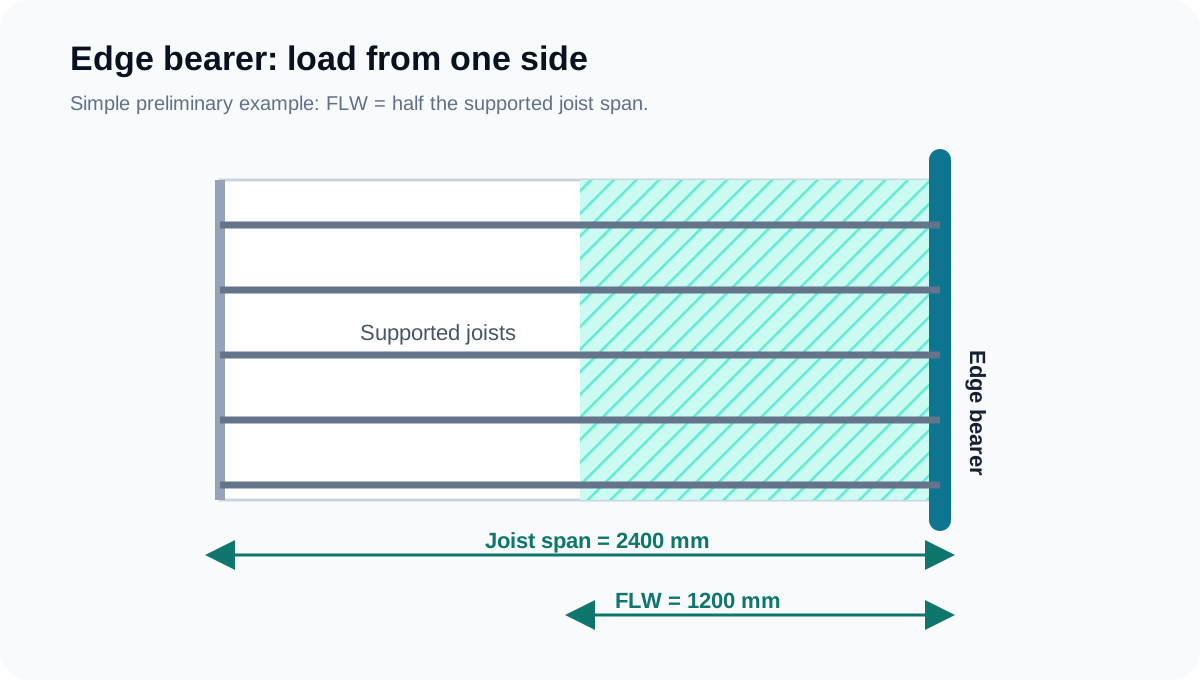
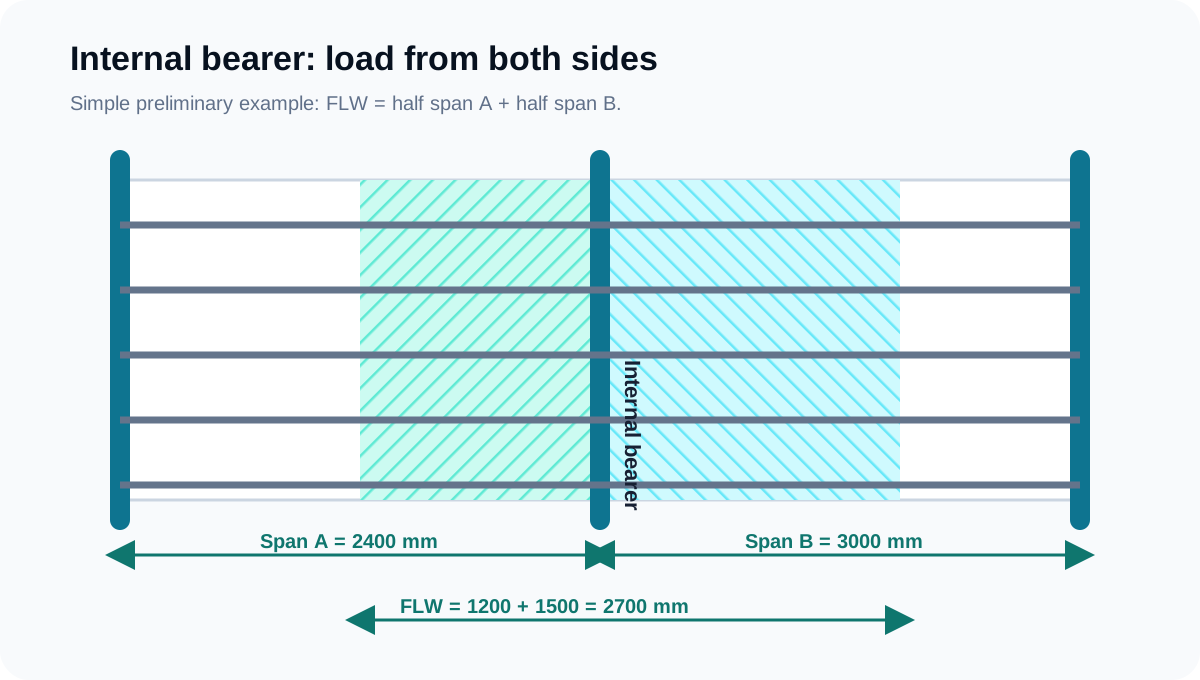
Worked examples
Supported joist span: 2400 mm
FLW = 2400 ÷ 2 = 1200 mm
Start with the 1200 mm source-table column where that table uses the simple half-span method.
Side A span: 2400 mm; side B span: 3000 mm
FLW = 1200 + 1500 = 2700 mm
If the table has no 2700 mm column, the next higher published column is commonly used for a conservative preliminary check unless the source says otherwise.
Using a span table
| Term | Meaning | Where it is used |
|---|---|---|
| Floor load width | The tributary width of floor or deck area carried by the bearer. | Selects the applicable FLW or supported-joist-span column in the bearer table. |
| Bearer span | The distance the bearer spans between posts, piers, walls or other supports. | Compared with the maximum bearer span shown for the selected product and FLW column. |
| Post spacing | The setout distance between repeated bearer supports. | Often establishes bearer span in a simple layout, but end supports, cantilevers and unequal bays must be checked. |
| Joist span | The distance joists span between bearers or other joist supports. | Used to determine tributary load contribution and to check the joists themselves. |
Calculation pathway
Mark joists, bearers, walls, posts, cantilevers and any openings or concentrated loads.
Identify the portion of floor or deck area delivering load to the bearer.
Use the exact or next applicable conservative FLW column according to the source instructions.
Compare the required support-to-support span with the product value and verify all source notes.
Reference sources
The calculator applies simple tributary-width geometry. The linked manufacturer documents illustrate how FLW or supported joist span is used in actual product tables and why more complex layouts need source-specific formulas.
| Source | Document/version | Relevant use |
|---|---|---|
| Spantec — Boxspan | Boxspan Residential Span Tables — April 2019 | Definitions and floor load width diagrams, including source-specific formulas for layouts more complex than the simple calculator. |
| Meyer Timber — meyPINE3 | meyPINE3 Handy Span Guide — updated March 2024 | Defines load width and provides floor-bearer tables arranged by FLW. |
| Hyne Timber | Hyne common product span tables | Provides floor-bearer and deck-bearer source tables for checking the selected load-width condition. |
Edge mode divides the entered supported joist span by two. Internal mode adds half of each entered supported joist span. Custom mode adds tributary widths already determined by the user. Rounding is optional and only assists with preliminary selection of a common table column.
Floor load width FAQs
FLW means floor load width. It is the tributary width of deck or floor area assumed to load a bearer or beam for the applicable source-table check.
For a simple edge bearer carrying joists from one side, a common preliminary starting point is half of the supported joist span. Confirm the source document because cantilevers, verandahs and irregular load paths can use different rules.
For a simple internal bearer, add the tributary contribution from each side—commonly half of the supported joist span on side A plus half of the supported joist span on side B.
No. FLW is the width of floor area loading the bearer. Bearer span is the distance between bearer supports, which may correspond to post or pier spacing in a simple layout.
Not necessarily. FLW follows the tributary area carried by the member and depends on the framing support layout.
For a preliminary comparison, selecting the next higher published FLW column is commonly conservative when the exact value falls between columns, unless the source gives a different method.
No. The simple calculator does not resolve complex cantilevers, openings, stairs, point loads, concentrated loads or non-uniform support layouts. Those cases require source-specific calculation or engineering review.
No. It is a preliminary geometry and table-navigation aid. Final selection must use the current source document and account for the complete project load path and design requirements.
Next step
Important: This calculator does not determine structural capacity and does not account for all possible load paths. Use it to understand preliminary FLW only, then verify the current manufacturer table and obtain project-specific engineering where required.